Monday, April 8, 2013

Guns and Poaching

 As the national debate over gun control rages and subsides, the ineptitude of Congress is highlighted and the threat of another mass shooting continues.  The media promotes and thrives in two-sided impasses like this because they can appear fair as well as contentious, attracting lots of readers and knowing the script. You hear the standard arguments on both sides (need I repeat them?), but there’s one argument I stumbled upon that incorporates a larger worldview on the issue of gun violence and tips the scale for me: poaching. I’m not saying it’s the strongest argument, far from it, but it’s one more consideration to throw at the puzzle of gun control, with room for ponderment and debate.

While watching Wild Russia: Siberia, a Planet Earth offshoot at a friend’s house, I noticed how often the narrator Clifford Wells would say the words “endangered” or “critically endangered,” and I couldn’t help think about the reasons why these strange and magnificent creatures were diminishing. Wells cited only  “increased human activity” as the culprit, which could be a lot of things, roads, railroads, mining, pipelines, pollution from construction, but no doubt over-hunting and the use of guns had a part to play. 

Is it possible that proper gun control, say bullet tracing, could put an end to poaching or over-hunting? Is it possible that proper gun control could have prevented the decimation of multitudes of once-thriving species? Would we still have massive herds of buffalo on the Great Plains or packs of wolves in the Ohio River Valley if we had enacted gun control around the time of the Louisiana Purchase? Maybe we should all just blame it on Jefferson.  

Certainly, there are other types of poaching and resource extraction that don’t involve guns that affect the environment just as negatively or worse. Hunting of animals by humans has been practiced for centuries, it’s just the more modern form that has gone awry, whether it’s seafloor dredging, commercial farming, or cutting down bird and insect habitats for paper. There is a sustainable way we need to hearken back to before we deplete all that we cherish.   

It reminds me of a scene from Futurama: Into the Wild Green Yonder, where a purple dwarf star morphs into a DNA repository for all the endangered species of the Universe. The Encyclopod decides to save a sample of human DNA, and Fry wonders out loud, “But I thought you only saved endangered species?” The creature offers a curt “farewell” and brisks away.   

I’ve always thought the world was a better place before guns; fighting with swords and bows, while admittedly more gruesome, is something an adolescent boy obsessed with fantasy and science fiction can’t shake off, but at least it was harder to kill something. You had to really want to do it. You had to be hungry and in need of protein or cold and in need of clothing to hunt down that wild animal for its meat and fur.

For most, it was probably an unpleasant experience or necessary chore, something they didn’t want to do all the time, hence natural population controls. Guns come along and it’s suddenly easier to kill something. Wars become quicker and more widespread, massacres and war crimes more commonplace, and the fate of wild animals and their ecosystems put into question. Guns and the more chilling effects of industrialization are inextricably linked.    

Here is where the media zeitgeist comes back into play. Guns and the fear of guns. People have documented and commented on the negative tone of news stories which always seem to focus on murders and robberies and accidents. You may be a responsible gun owner who goes off into the hills and gets his jollies shooting rounds into beer cans, but the story you hear on the news is “man gets shot in hunting accident.” Or “three die in car shootout” or “kid gets shot in eye by bb gun” or “police shoot man for pulling out wallet.” These news stories happened, but you don’t always hear about the “man who had a safe time with his buddies shooting pop bottles.”

Fear is a multi-edged sword (or mace) in that we fear these horrible news stories happening to us, so we go out and buy guns to protect us from such incidents. “Protect yourself from that cat burglar watching your house.” “Make sure you’re strapped when you walk past that crack dealer on the corner.”  The reason we have so much gun violence in America is because a lot of us are just paranoid and afraid.

There is no question that common sense measures (background checks, owner registry, ammo tracing, limited capacity magazines, etc.) are necessary, and do not restrict the Second Amendment rights of American citizens. The gun lobby, like a lot of lobbies, may be the real reason change has not come. There is plenty of regulation in other industries, but the ones with the most powerful lobbies in Washington, not so much.

I’m for banning certain types of weapons and/or at least making it real hard to obtain those weapons, but for me, the issue lies more deeply in our culture and how we interact as a community.  Are we being friendly, honest and transparent with our fellow citizens, or lying and manipulating to gain constant advantages of power and money? Is the greatest accomplishment in being human the power to dominate and destroy or do we have a softer, nobler and more holistic side?  Does the history of poaching and the extinction and endangerment of thousands of creatures due to unregulated human behavior teach us anything about failing to have gun control?  

I think so.

Wednesday, February 27, 2013

Print Extinction Level Event

Is anybody else worried about the possible extinction of paperback books? The decline in newspaper and magazine sales is evidence of a disturbing trend that the experience of reading, specifically print media, is dying away. The fact that you’re reading this, maybe on a tablet, possibly on a smartphone, most definitely on a computer of some sort, is a testament to the continued digitalization of media and the decline of what for millennia was the accepted form. Sayonara papyrus reed paper!

The popular rise in tablets and smartphones has predictably cut printing by nearly 10% according to some IT experts. This should make an environmentalist like myself happy, since less paper means less trees and water being used to make it.

However, I can’t shake this dark, dystopian fear of no longer having a paper trail. Editors and publishers could log in, on a market-driven whim or perhaps government-influenced decision, and “misplace” words, censor ideas, or change the identity and meaning of the whole piece. I’m talking about unsanctioned changes by the author, and this would most likely be long after the author is dead; God forbid a living author having to keep checking his online manuscript for the aforementioned errors.

Writing blogs as I do, I’m worried that even my Google docs are at risk. The cloud makes it easier and easier for third parties to solicit high-profile data and influence ideas to make them more palatable to consumers. You could argue this happened before on a much slower time-scale by market research firms, polling surveys and even king’s councils, and perhaps that’s natural for economies and societies to rule themselves, but the speed that this data, which makes internet videos viral and horrible singers pop sensations, is crunched into corporate policy and market trends is unbelievably fast. No single man or woman is above it. Contrast that with the speed that ideas in books spread and you’ll understand the change that our society is in the midst of.

Unauthorized editing already happens in theatre and film adaptations of books, usually to the begrudgment of readers and the fan base. A powerful studio with millions of dollars and lots of influence (look up the MPAA) comes in and says ‘Hey, this lovely, pastoral children’s story needs to be amped up with special effects and action scenes that never existed in the book because we need to sell 3D glasses and movie tickets to kids (and adults) who will never read the book.’ In fact, Hollywood, and it’s little sister television, is arguably responsible for the low levels of readership in America, contributing to the sad statistic that 20% of Americans did not read a book last year.

Perhaps it’s just paranoia and maybe I read too many books like Fahrenheit 451 and 1984 as a child, but the possibility of unauthorized editing and potential censorship is still there, and the likeliness of it happening even once is very high. To my knowledge it hasn’t happened yet in digital literature, but we likely wouldn’t hear about it if it did.

Putting those fears aside, you can still make an argument that e-books and e-ink are bad for readership habits. Many people find themselves getting interrupted by the urge to surf the web on tablets and computers, and you can’t really lay out on the beach and read without getting distracted by glare, running out of battery, or worrying about sand and water creeping into the crevices of the device. These things can all lead to losing the desire to read for pleasure.


You may be one of those folks that really enjoys their e-reading, and I don’t want to knock you off your high horse, but I think we can agree there are tangible benefits to the experience of reading a paperback or magazine that can never be taken away. As long as future generations of media producers and consumers understand and respect that, and as long as fire brigades don’t go around burning piles of books and superstates don’t invent languages without seditious ideas, then I think the world will be just fine...

Wednesday, July 11, 2012

The Weight of Consumption review

Last week was a frenetic blitz of rehearsing for our ensemble dance entitled “The Weight of Consumption,” one of Pick Up America’s Denver-based art projects choreographed by our very own Kelly, featuring as accompaniment, The Recycled Peace Drum, a shopping cart behemoth of a drum recently painted at the Hanuman Festival in Boulder to resemble a Dr. Suess creation.

Dancers and drummers were recruited to what became a volunteer cast of fifteen. We practiced several hours a day in the heat of the afternoon at Guildwerks this past week. Drought, record heat and no air-conditioning combined to make folks in attendance exclaim that the dance studio smelled “a bit like spaghetti.”

The story behind the dance is subconsciously tied to what PUA members have witnessed and internalized over the past two and a half years on the road picking up America’s trash. It recollects a past of abundance and sustainability, when rain fed us, and captures the moment of transition when that system was broken, as we hungrily sucked up the resources nature granted us and became solitary and disoriented. It ends with a realization that we can only get back to having healthy communities if we help each other break the material and immaterial chains that consume us. 

The themes and rhythms were evocative of a tribal rain dance, and given the extremely dry conditions and fires throughout the state of Colorado, many who looked on prayed it would indeed bear real fruit. As we made our final preparations and rehearsed Friday afternoon, the storm clouds gathered, and a vortex literally opened in the clouds above Guildwerks that resembled a dragon’s tail or snail shell. It proceeded to rain much-needed inches the rest of the night.   

We performed the dance twice Friday night. The first time was filmed and recorded live in the parking lot of Denver Open Media, where we were joined after the first act almost spontaneously by a march of Occupy Denver. Fortunately, the break between acts allowed Lily to read her lines as a mic check, the preferred form of communication in Occupy gatherings, and our voices were joined to those of the movement.

Occupy patiently let us finish the dance, and then asked us to join them, which led to a moment of inertia common to protests, and feels like the beginning of a battle charge, when everyone in a large group is focussed on a singular goal and taking to the streets. We decided to take the drum and join the Occupiers because moments like these don’t happen enough historically or presently.

We marched briefly down Santa Fe as First Friday was beginning to jump off. The art walkers stopped and cheered and took pictures, enjoying what to them was just another art piece as performance. Maybe that’s the best way to reach people; Pick Up America, after all, is just one big performance art piece trying to inspire change.  

The PUA contingent decided to head back and transport the drum and crew back to Guildwerks for our second performance. Guildwerks had invited us to perform at the unveiling party of a giant lotus flower effigy, built for Burning Man by the Colorado C.O.R.E. chapter. Several bands and DJs were playing including the ever-rawkus Inte Tribe.   

The second performance of “The Weight of Consumption” was even better than the first. As a drummer, I felt we rocked it and the music and dance was synchronized seamlessly. The crowd applauded us and in their enjoyment of our social commentary and the pondering of its message, our mission with this project was fulfilled. We now must finish building the bottle-brick bench in Five Points, and look ahead to crossing those mountains in the distance.

Sunday, April 29, 2012

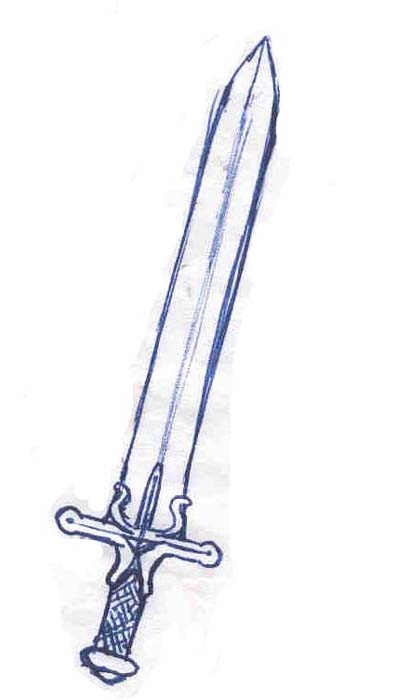
Blade of Daedulus

Here's a little weapon I created for all my nerdy D&D friends...:)

Blade of Daedalus
 
This unique broad sword is said to have been wielded by a skeptical young bard from Mosstone within the Tethyr region of Faerun. Mosstone borders the gigantic forest called The Wealdath and hosts a grove of powerful druids who run a school for the town's wealthier children. They focus on awakening spiritual potential and proper respect for nature and creation through prayer and ritual. Daedalus, at first a bright and obedient lad, became disillusioned with the strict dogma of the druids, and insisted there had to be more to the world. He decided to forsake his religion and leave Mosstone, traveling where the winds of beauty and exploration would take him. It is rumored the blade was forged by the elves living in The Wealdath after they heard of Daedalus' obstinate inquiries to his druid superiors and eventual banishment. It is said an elven envoy met Daedalus on his way north, along the Trade Way as it makes its route through the forest, and gave him the sword, granting him the blessing of Akadi, goddess of air and movement. Inscribed along the blade's edge are the Elven words for "silence, exile, and cunning."
            
Damage: 1d12 +4
Critical: 19-20/x2
Type: Slashing
Hardness: 10
Make: Elven
Usable by: Neutral
Immunity: Paralysis, Petrification, Slow
Once a Day: Silence (Lvl 2)
Once a Day: Globe of Darkness (Lvl 2)
Once a Day: Detect Thoughts (Lvl 2)

Wednesday, February 22, 2012

Chinook Winds

In Colorado, we have from time to time what one might call a ‘mighty wind.’ Racing through canyons, ricocheting off windows, and bending trees like rubber, the wind, which can reach 70 mph, can be a powerful, natural force. The winds, called Chinook or foehn winds, occur most frequently in late winter and usually provide a temporary rise in the temperature, but can be miserable and annoying to be in.

At my place last year, the wind always seemed to hit the night before the scheduled trash and recycling pick-up day. This would result in trash and recyclables (mostly recyclables since they weren’t bagged) being scattered across the lawns of every house on the street. Placing a brick on top of the toter lids offered little respite from the weekly hell winds. At my garden level apartment this year, even though the downstairs entrance faces east and the wind comes from the west, there always seems to be an accumulation of litter on the steps after heavy winds.

Since I have friends doing a similar task four or five days a week, I happily volunteered to reclaim the recyclable materials and properly dispose of the waste! As I picked up the chip bags, fast food bags, candy wrappers and just random plastic-styrofoam malarkey, I wondered at the source of this problem. I first asked myself could it be possible that nature has ways of spreading disorder through disasters like tsunamis and wind storms? If you look at before-and-after pictures of these natural disasters, you see whole communities torn apart and devastated, with litter lying everywhere, but the cause of the trash itself is not a natural one.

I eventually transitioned from blaming Mother Nature for the trash in front of my eyes, to realizing the manufactured convenience of humankind was responsible. Could it be divine will that trash be spread everywhere from the heavy winds so we see the error in our overly-consumptive lifestyles?

Waste was created by man alone; if you look at the circle of life in organic systems you realize that nothing is wasted. Moisture evaporates and condenses in the atmosphere, showering the earth with rain that gathers into bodies of water to be evaporated again, big fish eat little fish, and so on and so forth til the end of time. Somewhere way back in the history of homosapiens, this sustainable chain of life was broken, and hasn’t been the same since. In the words of Martin Luther King, Jr., “Somebody told a lie.”

I was once taught by a wise painter that a force exists in the universe called entropy, that the natural trend of things is to go from order to chaos if left undisturbed. Like a rope or cord that gets knotted if untouched for a period. Strict physicists forgive me, but is it possible that waste is just an untouched symptom of entropy, and humans aren’t treating it correctly? Because of it’s nature as disorderly and disgusting, trash is automatically delegated to the chaotic side of entropy, and it may be our job to bring order to it in the form of sustainability measures, and in the case of the Chinook winds, a sheltered waste disposal area.

The ways we can improve our communities and in turn the world are unlimited, but it must start with creating a space for positive change within ourselves. If we’re constantly attached to our routine of buying to-go meals, single-serving foods, and non-compostable/non-recyclable products, we’re never going to have a positive net impact on the environment. The current philosophy on distribution in America can be summed up by punk rock band The Dead Kennedys’ album name, “Give Me Convenience or Give Me Death.”

If we begin using and supporting products that are closer to home, use green energy, and have an end-of-life material recovery strategy, the obstacle of convenience will gradually diminish, and it’ll soon be easier and cheaper to attain them, from the larger demand as well as from our familiar routine of knowing where to get them. We will feel healthier mentally and physically, from the absence of strange chemicals known to cause cancer to the fact that we’re supporting farmers, entrepreneurs and manufacturers close to home.

On the other side of the ball are the producers who tell us the new ways are too expensive, won’t protect the product, or the materials aren’t durable, and there may be some truth to these claims. However, because something is cheaper to make doesn’t mean we should always use it. Look at housing materials. Again, carpenters forgive me, but you don’t want your house to be built with cheap composite wood and plastic siding; a mighty wind might knock it down. You want it to be made with stone and hardwood. Ironically, some of these longer-lasting materials are looked at as not eco-friendly, but their longer lifespans justify their use.

The bottom line is there is a plethora of useless packaging. Why do my saxophone reeds have to come in a gloss enameled paperboard box sealed by plastic, with the reeds inside individually wrapped in plastic? The answer is they come from France, and I have to say the reeds work better when they’re fresh, but they could just come in a recycled cardboard or paperboard box if they were made relatively close. Why do cigarettes come wrapped in plastic, with aluminum foiling around the top and non-compostable filters? Why do new electronics need to be encased in styrofoam, wrapped and sealed with plastic and those little black ties that end up in your drawer? Let’s be honest, why is styrofoam even being made anymore??

If we as a species are going to get real about protecting our homes and planet for future generations, we need to constantly question these norms of society that produce unnecessary pollution and heavy energy use. In the words of that wise painter-poet, Clint Richie, “Now is a point of awareness, now is conscious existence, now is a time for change. Change doesn’t mean conforming to the norm; change means thinking outside the deadly prison. Because the old ways just don’t work anymore. Sorry, we’re running out of time. We must change or we die.”

Tuesday, January 24, 2012

Origins of the word ‘Click.’

1581, of imitative origin; perhaps French or Dutch.
Probably developed earlier as a way to corral horses,
in expressing reprimand or sympathy, or produced in audible kissing.

Also, any of various stop consonants, found in Khoisan and as borrowings in southern Bantu languages, that are produced by the suction of air into the mouth.

The figurative sense of "fit together" first recorded in 1915.

Used as Canadian/U.S/European slang for kilometer,
sometimes spelled klik or klikken.

In computing, pressing and releasing a button on a mouse or other pointing device to cause an event in virtual space. Distinguished from “right-click;” the regular usage implies the left button.


Source: http://dictionary.reference.com/browse/click

Thursday, August 25, 2011

Solidarity Night

It’s been awhile since my last blog post on sustainability issues, and I know the thousands of my readers across the globe have been disappointed. I must apologize and give an explanation. My Mennonite Voluntary Service/Americorps assignment at Eco-Cycle in Boulder, CO ended, and I transitioned to another assignment at the Boulder Shelter for the Homeless. In both lines of work, there are challenges aplenty, but strangely, many similarities. I came up with the center of a Venn diagram, but sadly, don’t know how to create one on Wordpress.

They’re both nonprofits, with all the funding and tasking challenges that entails (Pick Up America can attest as well--matter of fact, while I’m on the subject, go to their Help! page ASAP). They both deal with cleaning up aspects of society that the average citizen disregards or attributes as disposable or unwanted. They both mitigate man-made problems, attempting to educate and offer solutions to said problems. They both enjoy immense, local community support, yet society as a whole and the establishment it helps elect has yet to implement many policy solutions they endorse. They both tango with hope and despair, and persevere for the simple fact that if you do not find a way, no one will.

However, in a note of positivity and the strange intercourse of zero waste and homelessness (and of all things), last October, community members and homeless volunteers in Boulder teamed up with Global Hope Network and Project Revive to clean up litter from Boulder Creek for donations. The project was a success not necessarily money-wise, but soul-wise, helping displaced individuals see the effect their work/worth has on the community around them as well as the global community, and would be a very cool model to try nationwide.

These kinds of projects tend to heal the community as a whole. I remember that in the build-up to the anti-globalization and free trade agreement protests in the late 90s and early-aughts, we always tried to stress the linkage of local to global. What does it mean that we pay 10 cents for a banana that was harvested by a subsistence farmer and transported all the way to the middle of our country? What does it mean that we’re not letting those same farmers unionize, that we enforce privatization on a nation’s oil supply, and make them pay for water? What does it mean that we’re mowing down much-needed canopies in a region that experiences the worst effects of global warming? “Think globally, act locally.” If you’re not safe, I’m not safe.

With monumental protests that bring light to an issue like the Battle of Seattle aside, projects like Pick Up America and Project Revive that make commitments at a grassroots level tend to have a greater impact than protesting. The dedication and sacrifice to pick up roadside (or creekside) litter out in the sweltering, summer sun mirrors that of the poorest farmers in the developing world building irrigation channels and tilling the Earth simply to survive. And it’s tough coming from a privileged background, knowing that your peers are doing big things, going to grad school and earning salaries commensurate with that same farmer’s lifetime income. But somewhere, somehow, you must pull that strength from deep within you, to continue struggling another day so that “liberty and justice for all” is not just something a schoolchild recites each weekday morning. Make it real, keep it real, love it real.